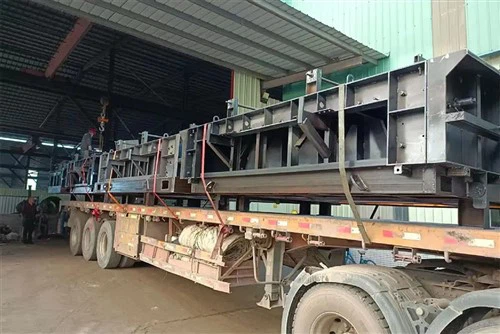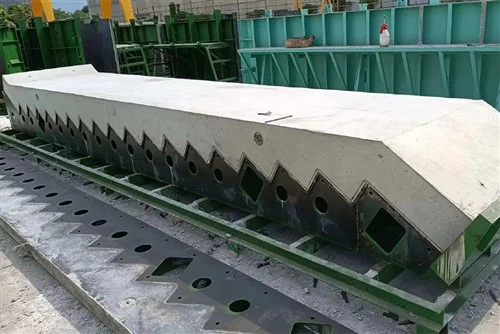

Leading Precast Concrete Mold Manufacturer
The company is one of the manufacturers in China that designs and produces molds, with more than 10 years of industry experience. We rank 189th among China's top 500 companies. The company specializes in designing and manufacturing wind turbine tower molds, PC molds, municipal molds, and related products.
-
![Precast Concrete Molds]() Precast Concrete MoldsConcrete: PC molds are essential tools for factories to design, produce, pour, and shape concrete, and are an important part of the industrialization of construction. Size and Specifications We offer
Precast Concrete MoldsConcrete: PC molds are essential tools for factories to design, produce, pour, and shape concrete, and are an important part of the industrialization of construction. Size and Specifications We offer

Why Choose Us
Professional Team
We have a mold technology team of 30 people. They are among the first batch of mold design and production technical talents in China.
Production Capacity
Our facility covers an area of 14,000 square meters and possesses a monthly molding capacity of 1,500 tons.
Global Markets
The company holds independent import and export qualifications, and its products have been exported to numerous countries, including Japan, the United States, the United Kingdom, Australia, and Malaysia.
Customization Services
We are one of the largest precast concrete mold suppliers in China, and our molds are customized according to customers' concrete component drawings.
Specification
|
Product Name |
Precast Concrete Mold |
|
Surface Treatment |
Epoxy Coating / PU Coating / Polished Steel |
|
Diameter Range |
3 m – 10 m (customizable) |
|
Segment Height |
1 m – 5 m (customizable) |
|
Dimensional Tolerance |
±1–2 mm |
|
Sealing System |
Rubber Gaskets / Seal Strips |
|
Opening Mechanism |
Manual / Hydraulic |
|
Operating Temperature |
-20°C to +60°C |

Material of Precast Concrete Mold
High-Strength Structural Steel is normally used to create concrete moulds that are required for larger, industrial projects that require strength, durability and resilience. They’re very much designed and manufactured to last. Steel concrete precast molds are highly valued for their ability to produce precise and consistent results over an extended period.
Advantages of Precast Concrete Mold
Faster Project Timelines
One of the greatest advantages of using precast concrete molds is speed. By manufacturing components such as beams, columns, slabs, and wall panels off-site, construction timelines are significantly shortened.
Consistent Quality and Precision
Precast concrete molds-especially those produced with CNC machining and advanced heat treatment technology-ensure every component is made with uniform dimensions and high precision.
Reduced Labor and On-Site Workload
With precast concrete molds, most of the work is completed in controlled factory environments. This minimizes the need for extensive on-site labor and reduces potential delays caused by weather or other site challenges.
Cost Savings Through Efficiency
Precast concrete mold systems reduce waste and increase productivity. High-quality molds enable repeat production of identical parts, which optimizes material usage and reduces overall project costs.
Versatility for Complex Projects
They can be customized to create architectural facades, decorative panels, and unique structural designs. This flexibility allows contractors to achieve both functional and aesthetic goals while maintaining efficiency.
Application of Precast Concrete Mold
Architectural Elements
From columns to balustrades, molds enable the creation of detailed architectural elements that would be time-consuming and expensive to carve by hand.
Paving and Landscaping
Precast paving stones and decorative elements for gardens are efficiently produced using molds, offering a cost-effective solution that enhances the environmental aesthetics.
Infrastructure Projects
Mold applications extend to large infrastructure projects like bridges and tunnels. By using molds, such structures benefit from the strength and durability of precast concrete.
Wind Turbine Tower Manufacturing
Applied in the production of concrete segments for hybrid wind turbine towers, enabling taller and more efficient energy structures.
The manufacturing of precast concrete mold involves several key steps, each crucial for ensuring the final product’s quality and performance. The process typically begins with the design phase, where the specifications of the mold are determined based on the project’s requirements.
Advanced CAD (Computer-Aided Design) software is utilized to create precise and detailed design drawings.
Once the design is finalized, the material selection takes place. Depending on the type of mold being manufactured (rubber, polyurethane, timber, or steel), the appropriate materials are chosen for their specific properties, such as flexibility, strength, and durability.
The next step is the fabrication of the mold. This involves cutting, shaping, and assembling the materials into the desired form. State of the art machinery and skilled craftsmanship are employed to ensure accuracy and quality in this phase.
Finally, the mold undergoes finishing processes, such as surface treatment and quality checks. These steps are crucial for enhancing the mould’s longevity and performance.

Ordering Process
Consultation
First, you will need to communicate with our sales representatives to discuss your specific requirements.
Quotation
We will provide a detailed quotation based on your specific requirements.
Order Confirmation
We will confirm all order details, after which we will formally initiate the production process.
Manufacturing
Throughout the production process, our quality control team will supervise every stage from start to finish.
Quality Inspection
Upon completion of production, we will conduct a rigorous quality inspection.
Shipment
The goods will be shipped to your location in accordance with the schedule agreed upon by both parties.
Shipping and Delivery
|
Lead Time |
30 to 45 days; custom products require a longer timeframe. |
|
Shipping |
Sea Freight |
|
Payment Methods |
T/T, Trade Assurance, Paypal, Western Union, Credit Card, L/C etc. |
Certificate


FAQ